Shares of Intel continued their strong upward momentum on Thursday, extending gains after a two-week rally that has pushed the stock near multi-decade highs. The chipmaker’s stock rose 4.5% to $67.93, following a brief pause after a nine-day winning streak that helped deliver its best monthly performance since 1987.
The rally has been fueled by optimism around Intel’s positioning in artificial intelligence infrastructure, even as questions around valuation and execution persist.
AI-driven server demand boosts outlook
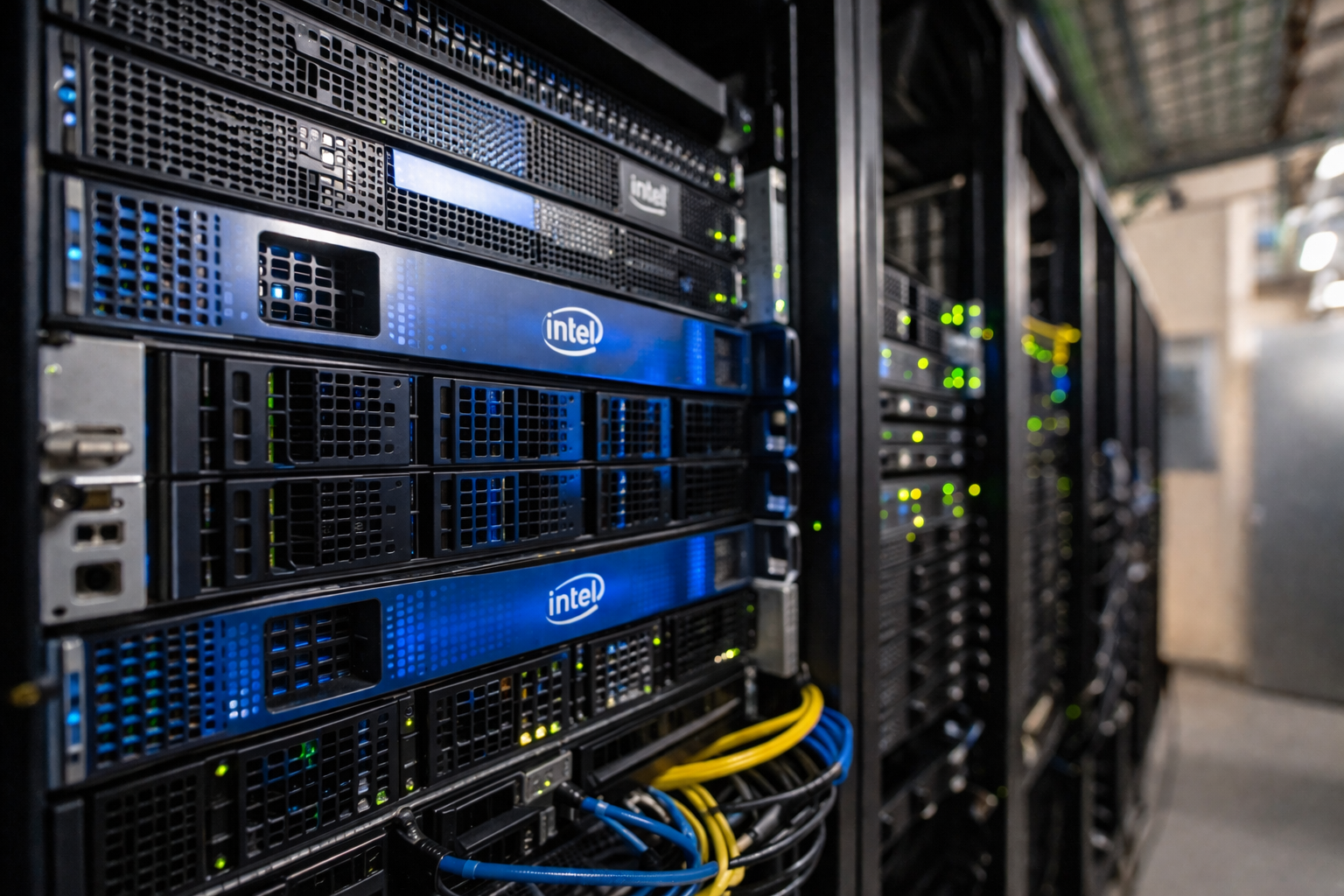
The core of Intel’s recent strength lies in its server central processing unit (CPU) business, which is benefiting from growing demand tied to AI workloads. Analysts point to the rise of “agentic AI” as a key driver, supporting higher volumes and pricing power in the data center segment.
According to Mizuho, server CPU demand could push average selling prices up by 10% to 15% this year, with the trend expected to persist through 2026 and potentially as far out as 2030.
This strength is helping offset continued weakness in the personal computer (PC) market. Intel may also benefit from this imbalance, as it can redirect manufacturing capacity from PC chips toward higher-margin server products, providing additional near-term upside.
Meanwhile, Bernstein SocGen Group has raised its assumptions for Intel’s Xeon server business, now forecasting 36% year-over-year revenue growth in 2026 alongside improved gross margins.
Analysts lift targets but remain cautious
Despite the stock’s rally, analysts have largely maintained neutral stances. Mizuho reiterated a Neutral rating while raising its price target to $59 from $48. Bernstein followed with a Market Perform rating and lifted its target to $60 from $36.
The upgrades reflect improved earnings expectations rather than a shift in overall conviction. Both firms have increased their forecasts for 2026 and 2027, citing stronger server demand and margin expansion.
Bernstein now expects Intel to report 2026 revenue of $53.3 billion and earnings per share of $0.82, with 2027 projections rising to $57.5 billion in revenue and $1.33 in EPS. While revenue estimates remain slightly below consensus due to weaker PC demand, earnings projections are higher on improved profitability.
At the same time, valuation concerns are becoming more prominent. Intel shares are trading at roughly 95 times forward earnings, a level that some analysts view as stretched given the company’s execution risks and competitive positioning.
Less than a quarter of Wall Street analysts currently rate the stock as a Buy, reflecting a cautious stance despite the recent momentum.
Execution risks and competition remain key
Intel’s long-term outlook continues to hinge on its ability to execute on multiple fronts, including its foundry expansion strategy and efforts to close the gap with competitors such as Advanced Micro Devices and Nvidia, both of which have established strong leads in AI chips.
While improving demand dynamics offers support, challenges remain in scaling operations and navigating a highly competitive landscape.
Looking ahead, investors will gain further clarity when Intel reports its first-quarter results next Thursday, offering insight into whether the company is on track to meet its upgraded forecasts.
“This is likely to be a messy quarter for Intel, but on balance we are feeling somewhat more positive as the agentic server CPU surge increasingly seems real,” wrote Bernstein analyst Stacy A. Rasgon. “We continue to struggle with both fundamentals and valuation especially after the recent run.”
The post Intel stock continues its surge; is valuation too expensive? appeared first on Invezz